






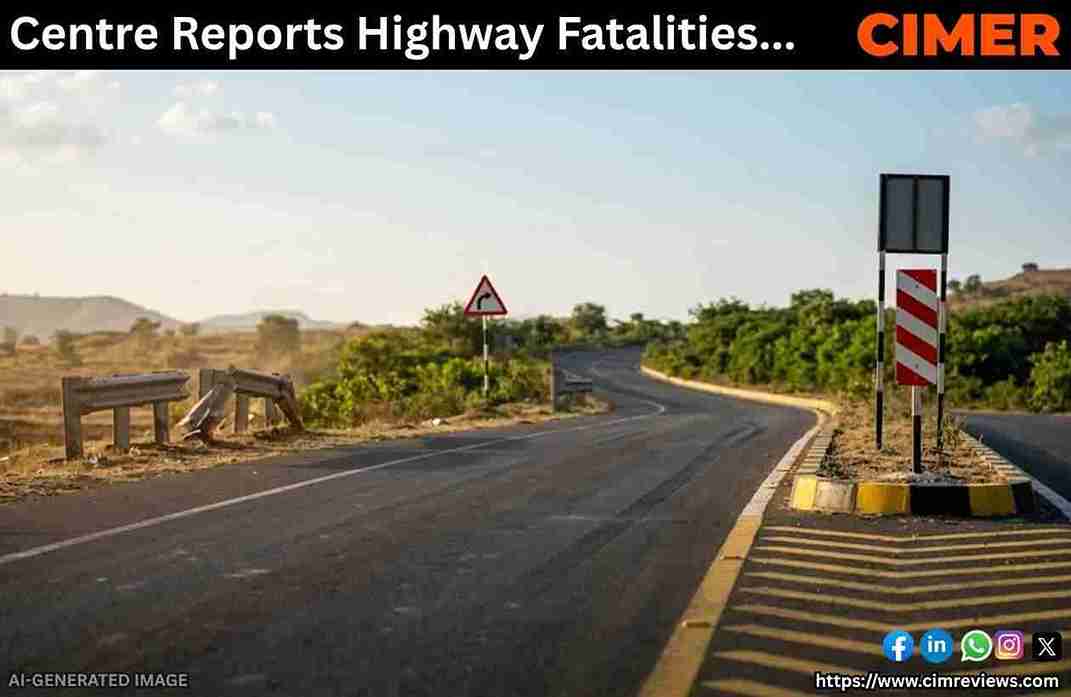


Centre Exposes Devastating Highway Black Spots Claiming 37,000 Lives
Imagine you’re on a regular road journey, listening to soft music and laughing with your loved ones, completely oblivious that the stretch of pavement ahead of you has swallowed thousands of lives. Every day, millions of naive commuters drive across the massive national highway network, confident that the smooth asphalt beneath their wheels will securely transport them to their destinations. However, beyond the facade of contemporary infrastructure is a scary, painful reality that has finally been revealed in official documents.
The government has released chilling data revealing that dangerous sections of road are silently changing ordinary drives into abrupt, catastrophic nightmares. Behind these cold, impersonal data are actual people, shattered hopes, and bereaved families forced to pick up the painful pieces of their broken lives.
Table of Contents
The Grim Blueprint of Blood and Asphalt
Official government statistics reveal a stark and alarming truth about the state of major transit corridors across the country. Since 2023, almost 37,000 valuable human lives have been cruelly cut short along designated national highway dark lanes. A total of 6,358 high-risk dark areas have been officially designated as lethal danger zones, which continue to cause severe collisions and death crashes.
These black spots are more than just statistical outliers; they are notorious areas where bad civil engineering, steep unbanked bends, deadly blind turns, and insufficient signage conspire directly against motorists. Each of these 6,358 places is a never-ending death trap, where innocent commuters meet horrible and entirely unexpected ends.
Why Do These Black Corridors Remain So Deadly?
When we investigate why these specific sections claim so many lives, we discover a terrible combination of engineering flaws and dangerous driving behaviours. Many of these black spots include fundamentally poor road design, a lack of safe pedestrian crossings, narrow bridges, and missing reflective signboards, making night drivers fully vulnerable to unanticipated risks.
Furthermore, excessive driving, aggressive overtaking, abrupt lane merging, and poorly lighted highway stretches increase the hazard significantly. Despite obvious information indicating that these specific routes are prone to frequent, serious bloodshed, physical rectification procedures frequently fall behind, forcing daily commuters to pass lethal danger zones on a continuous basis.
The Agonizing Human Cost Beyond the Numbers
Statistics can appear abstract on paper, but the astonishing 37,000 casualties are actually terrible personal stories of unexpected, overwhelming catastrophe. They symbolise loving parents who never came home to cuddle their children into bed, ambitious young professionals whose promising careers vanished in an instant, and entire families permanently afflicted by unrelenting anguish.
When a bright life is abruptly cut short on a high-speed route, the emotional and financial anguish spreads outward, hurting extended families and communities. Emergency responders routinely describe the harrowing scenes they witness along these dangerous sections, when twisted metal, shattered glass, and lost hopes litter the frigid tarmac.
Accelerating Safety Measures and Engineering Fixes
To address this massive public safety catastrophe, infrastructure authorities and traffic enforcement agencies around the country must take urgent, uncompromising action. The government has launched specific initiatives to address these deadly dark corridors, including physical road reengineering, better overhead street lighting, highly visible retro-reflective signboards, and modified junction entrance points.
Mandatory speed governors, rumble strips, electronic enforcement cameras, and continuous highway police patrolling are also being prioritised to reduce dangerous driving behaviour. However, road safety advocates emphasise that thorough engineering work must be completed at a speedy, life-saving pace to prevent future innocent commuter deaths on these deadly route corridors.
What Commuters Must Do to Survive High-Risk Roads
While structural repairs and engineering improvements are slowly being implemented, drivers and passengers must exercise extreme caution when travelling on national highways. Recognising the existence of dangerous black corridors along key transportation routes is an important first step toward ensuring personal safety while travelling long distances on the highway.
Commuters are strongly recommended to follow posted speed limits, avoid overnight tiredness driving, keep cars in good condition, and pay close attention to hazard warning signboards. Adopting proactive defensive driving strategies, maintaining large safe braking distances, and ensuring that every passenger wears a seatbelt are still critical defences against unpredictable highway perils on these risky regions.
About CIME Reviews: Stay updated with the latest developments in construction, infrastructure, and mining industries through our comprehensive analysis and expert insights.
Group Media Publication
Construction, Infrastructure, Mining and Energy
General News Platforms – IHTLive.com
Entertainment News Platforms – https://anyflix.in/
Powered By: Super-fast and reliable streaming is delivered by Bunny CDN.
Explore: https://bunny.net/?ref=i33ljelh4w
Disclaimer: This content is for educational and informational purposes only and does not constitute investment, financial, or trading advice, nor a recommendation to buy or sell any securities. Readers should consult a SEBI-registered advisor before making investment decisions, as markets involve risk and past performance does not guarantee future results. The publisher and authors accept no liability for any losses. Some content may be AI-generated and may contain errors; accuracy and completeness are not guaranteed. Views expressed do not reflect the publication’s editorial stance.




.jpg "Coal output rises on strong captive and commercial mine performance")